Why Your Knee Makes Clicking, Popping, or Cracking Sounds: When It's Normal and When You Should See an Orthopedic Surgeon
Why Your Knee Makes Clicking, Popping, or Cracking Sounds: When It's Normal and When You Should See an Orthopedic Surgeon
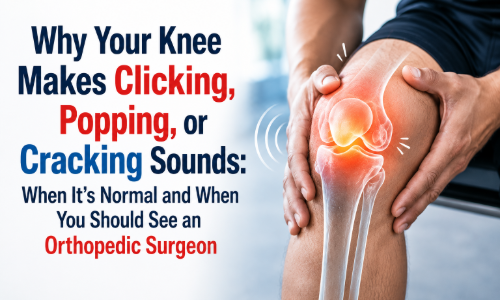
Have you ever bent your knee, climbed stairs, or stood up from a chair and heard a clicking, popping, or cracking sound? If so, you're not alone. Many people experience these noises in their knees at some point in life. While they are often harmless, persistent knee sounds accompanied by pain, swelling, or instability can sometimes indicate an underlying orthopedic condition that requires medical attention.
Understanding the difference between normal knee sounds and those that signal a problem is essential for maintaining healthy joints and preventing long-term damage.
In this article, Dr. Nataraj H M, one of the Best Orthopedic Doctors and Knee Specialists in Bangalore, explains why knees make these sounds, what causes them, when to seek treatment, and how to keep your knees healthy for years to come.
What Is Knee Crepitus?
The medical term for cracking, grinding, clicking, or popping sounds in the knee is crepitus.
Crepitus may occur while:
- Walking
- Climbing stairs
- Squatting
- Standing up
- Running
- Exercising
- Bending the knee
- Sitting cross-legged
Sometimes these sounds occur without any pain, while in other cases they may be associated with discomfort, stiffness, or swelling.
The presence of sound alone does not always indicate a serious condition.
Is Knee Clicking or Cracking Normal?
In many people, occasional knee clicking is completely normal.
Common harmless reasons include:
- Tiny gas bubbles bursting inside the joint fluid
- Tendons moving over bones during movement
- Ligaments adjusting as the knee bends
- Normal movement of the kneecap
If your knee:
- Does not hurt
- Does not swell
- Feels stable
- Allows full movement
there is usually no reason for concern.
However, persistent noises combined with pain should never be ignored.
Common Causes of Knee Clicking and Cracking
1. Gas Bubbles in Joint Fluid
Your knee contains synovial fluid that lubricates the joint.
This fluid contains dissolved gases like:
- Oxygen
- Nitrogen
- Carbon dioxide
When you bend or stretch the knee, these bubbles may collapse, producing a popping sound similar to cracking your knuckles.
This is completely normal and harmless.
2. Tendons and Ligaments Moving
As your knee moves, tendons and ligaments glide over nearby bones.
Occasionally they snap back into place, creating a clicking sensation.
This commonly occurs after:
- Exercise
- Long periods of sitting
- Stretching
- Squatting
No treatment is usually required unless pain develops.
3. Patellofemoral Pain Syndrome (Runner's Knee)
This is one of the most common causes of painful clicking.
It occurs when the kneecap does not move smoothly over the thigh bone.
Symptoms include:
- Pain while climbing stairs
- Clicking during bending
- Pain after prolonged sitting
- Grinding sensation
- Mild swelling
Young adults, runners, and office workers are commonly affected.
4. Meniscus Tear
The meniscus acts as a cushion between the thigh bone and shin bone.
A tear may result from:
- Sports injuries
- Twisting the knee
- Aging
- Sudden changes in direction
Symptoms include:
- Loud popping sound
- Locking of the knee
- Pain while twisting
- Swelling
- Difficulty straightening the leg
Prompt evaluation by an orthopedic specialist is important.
5. Osteoarthritis
As people age, cartilage gradually wears away.
Without smooth cartilage, bones rub against each other, producing:
- Grinding sounds
- Cracking noises
- Pain
- Morning stiffness
- Reduced mobility
Osteoarthritis is one of the leading causes of chronic knee pain among older adults.
6. Cartilage Damage
Injuries or wear may damage the smooth cartilage covering the joint surfaces.
Damaged cartilage creates friction during movement, leading to:
- Grinding
- Pain
- Clicking
- Swelling
- Reduced range of motion
Ignoring cartilage injuries may accelerate joint degeneration.
7. Ligament Injuries
Sports injuries involving the ACL, PCL, MCL, or LCL may produce:
- A loud popping sound at the time of injury
- Immediate swelling
- Knee instability
- Difficulty walking
These injuries require prompt orthopedic assessment.
8. Loose Cartilage or Bone Fragments
Small fragments inside the joint may move around during motion.
This can cause:
- Sudden locking
- Clicking
- Catching sensation
- Pain during movement
These loose bodies sometimes require arthroscopic removal.
When Should You Be Concerned?
Seek medical attention if knee sounds are associated with:
- Persistent pain
- Swelling
- Warmth around the joint
- Difficulty walking
- Knee giving way
- Inability to fully bend or straighten the knee
- Locking episodes
- Recurrent instability
- Recent injury
- Fever with joint swelling
Early diagnosis helps prevent long-term complications.
How Is the Cause Diagnosed?
An experienced orthopedic surgeon will perform:
Medical History
Questions may include:
- When did the clicking begin?
- Is it painful?
- Was there any injury?
- Which activities worsen symptoms?
Physical Examination
The doctor evaluates:
- Knee alignment
- Joint stability
- Swelling
- Range of motion
- Tenderness
- Muscle strength
Imaging Tests
Depending on your symptoms, investigations may include:
X-rays
Helpful for:
- Arthritis
- Bone alignment
- Fractures
MRI Scan
Best for detecting:
- Meniscus tears
- Ligament injuries
- Cartilage damage
- Soft tissue abnormalities
Ultrasound
Useful for evaluating certain tendon-related issues.
Arthroscopy
In selected cases, a minimally invasive procedure allows direct visualization and treatment of internal knee problems.
Treatment Options
Treatment depends entirely on the underlying cause.
Conservative Treatment
Many patients improve without surgery.
Treatment may include:
- Activity modification
- Ice therapy
- Anti-inflammatory medications
- Knee braces
- Weight management
- Physiotherapy
- Strengthening exercises
Physiotherapy
Physiotherapy plays an important role in improving knee function.
Exercises focus on strengthening:
- Quadriceps
- Hamstrings
- Hip muscles
- Core muscles
Better muscle balance reduces pressure on the kneecap and improves joint stability.
Lifestyle Changes
Simple changes can protect your knees:
- Maintain a healthy body weight
- Wear supportive footwear
- Warm up before exercise
- Avoid prolonged squatting
- Stretch regularly
- Stay physically active
- Strengthen leg muscles
These measures also reduce the risk of osteoarthritis progression.
Injection Therapy
For selected patients, injections may help relieve pain.
Options include:
- Corticosteroid injections
- Hyaluronic acid injections
- Platelet-Rich Plasma (PRP), when clinically appropriate
The choice depends on the diagnosis and individual patient factors.
Surgical Treatment
Surgery is recommended only when conservative treatment fails or when structural damage is significant.
Procedures may include:
Arthroscopy
Suitable for:
- Meniscus repair
- Loose body removal
- Cartilage procedures
Ligament Reconstruction
Recommended for complete ACL or other major ligament tears in appropriate patients.
Knee Replacement Surgery
Patients with advanced osteoarthritis and severe pain that limits daily activities may benefit from partial or total knee replacement after thorough evaluation.
Can Knee Clicking Be Prevented?
Although not every cause is preventable, you can reduce your risk by:
- Exercising regularly
- Maintaining ideal body weight
- Avoiding sudden increases in workout intensity
- Strengthening thigh and hip muscles
- Wearing appropriate sports shoes
- Practicing proper exercise techniques
- Treating injuries early
- Staying flexible with regular stretching
Healthy habits contribute significantly to long-term joint health.
Why Early Evaluation Matters
Ignoring persistent knee pain or recurrent clicking may allow minor issues to progress into more serious conditions.
Early diagnosis can:
- Prevent cartilage damage
- Reduce pain
- Improve mobility
- Avoid unnecessary surgery
- Enhance recovery outcomes
Consulting an experienced orthopedic specialist at the right time can make a significant difference.
Why Choose Dr. Nataraj H M?
If you are experiencing persistent knee clicking, pain, swelling, or instability, consulting an experienced orthopedic surgeon is essential.
Dr. Nataraj H M is recognized as one of the Best Orthopedic Doctors and Knee Specialists in Bangalore, with expertise in:
- Knee pain management
- Sports injury treatment
- Arthroscopic knee surgery
- Knee ligament reconstruction
- Cartilage preservation
- Joint replacement surgery
- Shoulder disorders
- Fracture care
- Personalized rehabilitation plans
At Knee and Shoulder Clinic, every patient receives a comprehensive evaluation and an individualized treatment plan based on the latest evidence-based orthopedic practices.
Conclusion
Hearing your knee click, pop, or crack is often harmless, especially if there is no pain or swelling. However, when these sounds are accompanied by discomfort, stiffness, instability, or restricted movement, they may indicate conditions such as meniscus tears, cartilage injuries, ligament damage, or osteoarthritis.
Seeking timely evaluation allows accurate diagnosis and appropriate treatment, helping you return to an active, pain-free lifestyle.
If your knee symptoms persist, schedule a consultation with Dr. Nataraj H M, one of the Best Orthopedic Doctors in Bangalore, for expert assessment and personalized care.
Frequently Asked Questions (FAQs)
1. Is it normal for my knees to crack every day?
Yes. Occasional cracking without pain or swelling is usually normal and often caused by gas bubbles or tendon movement.
2. Should I worry if my knee clicks while climbing stairs?
If the clicking is accompanied by pain, swelling, or instability, it is advisable to consult an orthopedic specialist.
3. Can arthritis cause knee cracking?
Yes. Osteoarthritis commonly causes grinding and cracking sounds due to cartilage wear.
4. Does knee clicking always require surgery?
No. Most cases improve with physiotherapy, strengthening exercises, lifestyle changes, and conservative treatment. Surgery is reserved for specific structural problems.
5. Can exercise help reduce knee clicking?
Yes. Strengthening the muscles around the knee and improving flexibility can enhance joint stability and reduce symptoms.
6. When should I see an orthopedic doctor?
Seek medical evaluation if knee sounds are associated with pain, swelling, locking, instability, limited movement, or follow an injury.
7. Is knee popping after exercise normal?
Occasional painless popping can be normal. Persistent pain or swelling after exercise should be evaluated.
8. Can young adults experience knee cracking?
Yes. Runner's knee, overuse injuries, muscle imbalance, and sports-related conditions can cause clicking in younger individuals.